By SmashMeals Editorial — 2026-05-13 — Health & Nutrition
The Five Phases — And the Math That Defeats Most Patients
According to the American Society for Metabolic and Bariatric Surgery, bariatric patients need to drink 64 ounces of fluid or more each day and consume 60 to 100 grams of protein per day, with most progressing through a structured diet sequence: clear liquids, then full liquids, then pureed foods, then soft foods, and eventually regular foods. The published Roux-en-Y postoperative care pathway in ScienceDirect's review of ASMBS guidelines notes that a minimum protein intake of 60 g/day — and up to 1.5 g/kg of ideal body weight per day — with liquid protein supplements is recommended, and that dumping syndrome is minimized specifically by eliminating simple carbohydrates.
The diet progression typically runs about 8 to 12 weeks. Per the published clinical guidance summarized by Bariatric Fusion, Southern Surgical Associates, and AmBari Nutrition: 2–3 days post-surgery is clear liquid only; 1–2 weeks is full liquids and bariatric clear protein drinks; 3–4 weeks introduces purees and soft foods; 4–6 weeks transitions to soft proteins like eggs and fish; and the regular-food phase typically begins around weeks 6–8 depending on individual tolerance and surgeon clearance. Throughout all phases, the protein target stays the same: 60 to 100 grams per day. Stable. Non-negotiable. For life.
Here is the math that defeats most patients. A bariatric pouch immediately post-op holds roughly 2 ounces. At the soft-food phase, it holds perhaps 4 ounces. By the regular-food phase, 6 to 8 ounces. Hitting 60 grams of protein on a 2-to-6-ounce pouch means every single bite has to be protein-dense. There is no margin for crackers, no margin for fries, no margin for "I'll just eat a bigger dinner." The patient is now running their entire metabolic life on the equivalent of five very small meals a day, each one of which has to deliver 12 to 20 grams of protein. Forever. And every patient who has been through it will tell you the same thing: the hardest part is not the surgery, the hospital stay, or the first month. The hardest part is month six, month twelve, and month thirty-six, when the novelty has worn off and you still have to eat protein first, every meal, for the rest of your life.
The Two Risks Nobody Warns Patients About Loudly Enough
The first risk is protein malnutrition. According to clinical research published on ClinicalTrials.gov reviewing protein supplementation after bariatric surgery, numerous studies indicate an increased incidence of protein malnutrition after bariatric surgery, including decreases in albumin and prealbumin levels, significant reductions in lean body mass, and inadequate protein intake after surgery. The causes are nutrient malabsorption (particularly with Roux-en-Y), restricted food volume, postoperative vomiting, and food intolerances that develop in the first six months. The consequence is muscle wasting, fatigue, hair loss, brittle nails, and ironically — slower weight loss as metabolism collapses. The published study on protein cards for bariatric patients in PMC found that inadequate protein intake post-operatively is associated with "greater loss of fat-free mass" and lean mass, while adequate protein intake is associated with "increased satiety" and better long-term outcomes.
The second risk is dumping syndrome — a rapid emptying of stomach contents into the small intestine, triggered primarily by simple carbohydrates and high-sugar foods, producing nausea, sweating, dizziness, abdominal cramping, and diarrhea within 15 to 30 minutes of eating the offending food. The ASMBS guidelines are explicit: eliminate simple carbohydrates to prevent dumping. This means no sugary drinks, no candy, no white bread, no processed snack foods, and — critically — careful sourcing of sauces, marinades, and prepared meals that may contain hidden added sugars. A bariatric patient who orders takeout from a restaurant that uses sugar-loaded sauces can experience full dumping syndrome from what looked like a "healthy" meal on the menu.
This is where commercial meal services regularly fail bariatric patients. Most pre-packaged meals contain added sugars in the sauces. Most fast-food meals contain refined grains and seed oils. Most restaurant meals are portion-impossible — a typical restaurant entree is 16 to 24 ounces, three to four times what a regular-phase bariatric patient can eat. The post-bariatric patient is essentially left with two real options: cook every single meal at home for life, or find a meal prep service engineered around their nutritional reality. The first is unsustainable. The second is what Smash Meals was built for.
Planning Gluten-Free Food After Bariatric Surgery
People who already follow a gluten-free diet still need to plan around their surgical program's post-operative phases and protein guidance. The published gluten-free diet guidance from Mayo Clinic notes that poorly treated celiac disease can increase the risk of vitamin and mineral deficiencies, while bariatric procedures can carry their own nutrition considerations.
Ramsay Health guidance for bariatric patients notes that continuing a gluten-free diet through pre-op and post-op is possible but requires planning to obtain adequate protein from suitable sources. SmashMeals prepares food in a dedicated gluten-free kitchen where equipment is not shared with gluten-containing production. This reduces cross-contact risk compared with a shared kitchen, but customers should review each meal label and follow guidance from their surgical team.
The Smash Meals Post-Op Plate, Phase by Phase
Smash Meals is not a clear-liquid provider — patients in the first two phases (clear liquids and full liquids) work directly with their surgical team's recommended protein shakes, broths, and bariatric clear protein drinks. Where Smash Meals becomes invaluable is from the pureed/soft-food phase onward, and especially through the regular-food phase that defines the rest of the patient's life.
For the soft-food phase, our entrees that work beautifully include slow-cooked proteins that flake or shred easily — our 18-hour brisket, our smoked turkey, our shredded chicken preparations. The 18-hour smoke breaks down connective tissue to the point where the protein is genuinely soft, tender, and digestible by a healing pouch. "Most meal preps take fifteen minutes. Ours takes eighteen hours." That long cook time is exactly what makes our protein bariatric-friendly when fast-food meat would be too tough to tolerate. Patients in the soft-food phase typically take half of one of our entrees and combine the slow-cooked protein with our cauliflower rice or other softer side, hitting 12 to 15 grams of protein per sitting — exactly the per-meal target for this phase.
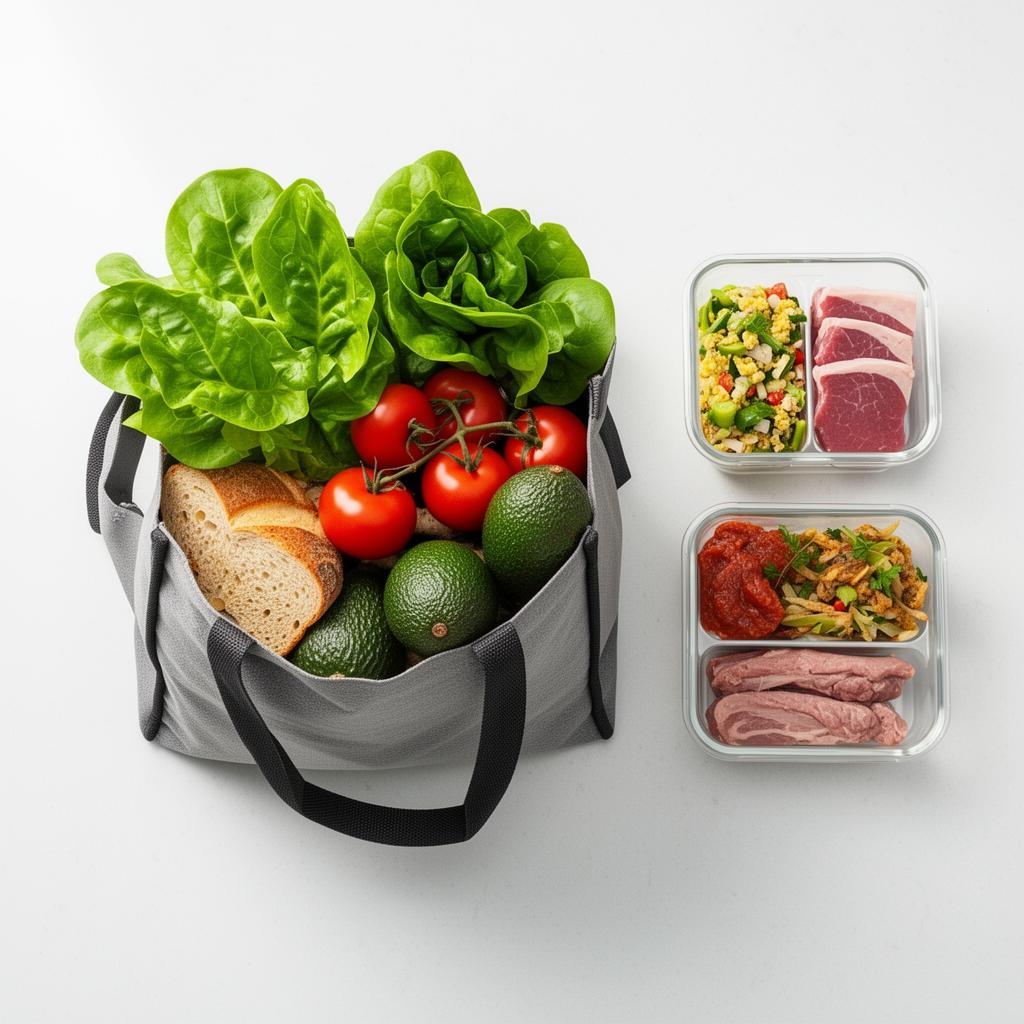
For the regular-food phase, our entire menu opens up. Our standard 10-ounce entree exceeds the typical bariatric portion size, which means patients simply eat one Smash Meals entree across two sittings — half at lunch, half at dinner — getting roughly 15 to 20 grams of protein per half-portion. Our Thai Peanut Chicken with Cauliflower Rice splits into two sittings of 15g protein and 128 calories each. Our Grilled Chicken Salad with Ranch becomes a perfect single bariatric meal at 24g protein and 263 calories. Our Greek Yogurt Granola Berries breakfast (27g protein) is a single complete morning meal for most regular-phase patients. Stacked across a day, two split entrees plus a yogurt breakfast plus a Smash Bar or Peanut Butter Protein Ball snack lands the patient cleanly at 70 to 85 grams of protein — squarely in the ASMBS target range.
The Bariatric-Specific Menu Track
For our most committed bariatric customers, Smash Meals offers a bariatric-specific portion track at 5 to 8 ounces — half-sized portions of the same gluten-free, protein-anchored entrees, designed exactly to the pouch capacity of a regular-phase patient. These portions eliminate the "split the entree" workaround and arrive already sized to a single sitting. Our snacks — Smash Bars, Peanut Butter Protein Bars, Peanut Butter Protein Balls, and Chocolate Coconut Truffles — are sized at 2.5 to 3 ounces, perfect for the small between-meal protein hits that most bariatric dietitians recommend. Several of these snacks are shelf-stable and ship beautifully via FedEx Ground to bariatric patients anywhere in our delivery zone.
This is not generic meal prep. This is meal prep designed by an operator who has spent years working alongside bariatric patients in the Tri-Cities region, sized to the exact post-op reality. Smash Meals has been operating since 2017 — long enough to have watched dozens of regular customers go through the full bariatric journey, watched what works and what does not, and adjusted the menu accordingly.
The Long-Term Win: Habits That Outlast the Surgery
The hardest truth in bariatric medicine is this: most weight regain happens 2 to 5 years post-op, when patients drift back to old eating patterns. The patients who do not regain are almost always the patients who built a sustainable food infrastructure around their new stomach. They are not relying on willpower. They are not relying on motivation. They have an environment that makes protein-first, portion-correct, sugar-avoiding eating the path of least resistance. The Bariatric Surgery Center research summarized at BASS Bariatric explicitly identifies "focus on protein first in every phase," "avoid 'trendy' post-bariatric diets that may be unsafe," and "stay in close contact with your surgeon and dietitian" as the keys to long-term success.
Smash Meals is that environment. Local delivery to the Tri-Cities — Kingsport, Johnson City, Bristol, and surrounding communities including Elizabethton, Greeneville, Jonesborough, and Erwin — runs every week. FedEx Ground reaches eligible addresses, covering bariatric centers and patient populations across the Southeast, Mid-Atlantic, Midwest, and parts of the Northeast. Bariatric patients in Atlanta, Charlotte, Nashville, Asheville, Lexington, Louisville, Cincinnati, Columbus, Pittsburgh, Philadelphia, and dozens of other markets currently use Smash Meals as their permanent post-op food infrastructure. Orders close Thursday at midnight. Meals ship the following week.
The Bottom Line
Bariatric surgery is not a finish line. It is a starting line for a lifetime of protein-first, portion-aware, gluten-free eating. The patients who succeed are the ones who treat nutrition as infrastructure, not willpower. Smash Meals is that infrastructure — gluten-free by design, protein-anchored by recipe, portion-defined by container, and delivered to the door so the patient never has to wonder what to eat next.
This is what convenience without compromise actually looks like.
Eat Healthy...Live Healthy.
Convenience Without Compromise.
Fresh • Prepared • Ready to Go.
SmashMeals.com