By SmashMeals Editorial — 2026-08-17 — Health & Nutrition
KINGSPORT, Tenn., Aug. 17, 2026 — The question arriving at kitchen counters across the Tri-Cities this year is not whether GLP-1 medications reduce appetite. It is what to do about the fact that they do.
When body weight comes down, some of what is lost is lean tissue, not only fat. That is true of weight loss generally, and it is the reason professional guidance on GLP-1 therapy consistently pairs two recommendations: eat enough protein, and do appropriate resistance exercise. A 2025 multi-society advisory on nutritional priorities during GLP-1 therapy puts nutrition quality, protein adequacy, and preservation of muscle and bone mass at the centre of the conversation.
The honest framing matters here. Protein plus strength training supports lean-mass preservation during weight loss. Neither guarantees that no muscle is lost, and any product or programme that promises prevention is making a claim the evidence does not support.
Why less food makes food quality more important
Reduced appetite is the intended effect of these medications. The practical consequence is that a person's entire daily nutrition now has to fit through a smaller opening.
At a normal intake, protein, vitamins, and minerals arrive partly by accident — there is simply a lot of food passing through. At a much lower intake, that accidental coverage disappears. Every meal has to carry more responsibility, and protein is usually the first thing to fall short.
“When someone can only finish a few bites, those bites have to be worth something,” said Lew Kizer, owner of SmashMeals. “That is a food quality problem, not a willpower problem.”
The Dietary Guidelines for Americans describe general protein-food patterns, and USDA FoodData Central lets anyone check the protein in a specific food rather than estimating it. Individual daily targets, however, belong to a prescriber or registered dietitian — they vary with body size, age, activity, kidney function, and the rest of a person's medical history.
Where resistance training fits
The second half of the guidance is the half most often skipped.
The federal Physical Activity Guidelines for Americans recommend that adults do muscle-strengthening activities involving all major muscle groups on two or more days a week, in addition to aerobic activity. That recommendation exists independently of weight-loss medication — but it becomes considerably more relevant during a period of intentional weight loss, because it is the stimulus that tells the body to keep the muscle it has.
What counts is broader than a barbell: resistance bands, bodyweight work, machines, and loaded carries all qualify. What matters is that the muscles are actually being asked to do something demanding, on a regular schedule.
Anyone with cardiac, orthopaedic, or post-surgical considerations should get clearance and, ideally, programming guidance before starting.
A practical structure for smaller appetites
The tactics people report as most useful are unglamorous:
- Protein first on the plate. Before starch, before liquids, while the appetite that exists is still available.
- Smaller and more frequent rather than three large meals that go unfinished.
- Fluids between meals instead of during, so liquid does not occupy limited capacity.
- Pre-portioned food in the fridge, because the cooking step is the barrier most people actually hit.
- Strength work on the calendar, treated as an appointment rather than an aspiration.
Side effects that go beyond ordinary appetite loss — persistent vomiting, inability to keep fluids down, severe abdominal pain — are a matter for the prescribing clinician, not for meal planning.
How prepared meals fit the problem
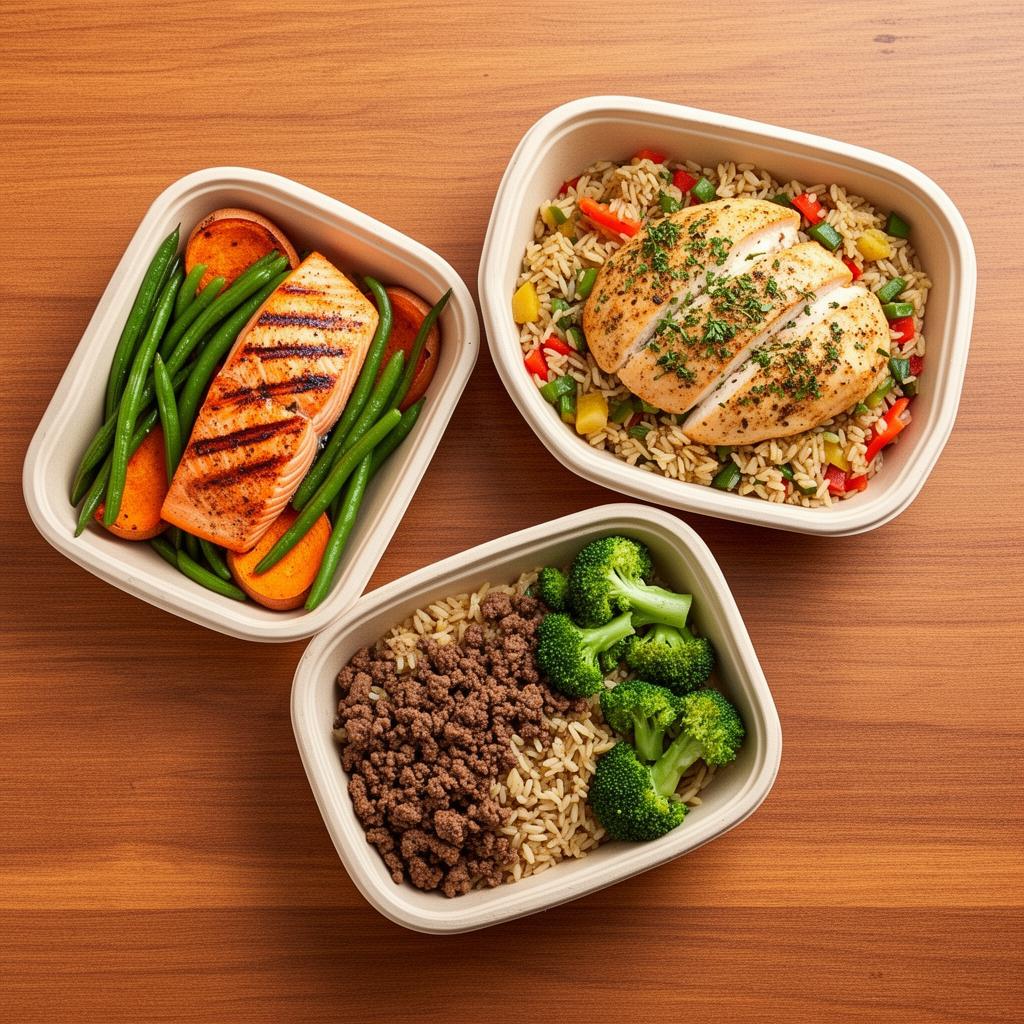
SmashMeals cooks fresh, individually portioned, macro-labelled meals in a dedicated gluten-free kitchen in Kingsport, with a protein-forward rotation that includes smaller à la carte portions for reduced appetites.
That is a convenience tool, not a treatment. It removes the cooking step and the portioning step, which is where most people's plans break down; it does not replace an individualised eating plan from a care team.
Readers working through this can start with the SmashMeals guide to eating protein-first on a small appetite, the GLP-1 meal support page, or the high-protein menu.
This article is general nutrition education, not medical advice. Nutrition needs, medication effects, and exercise tolerance are individual — follow the guidance of your prescriber, surgical program, or registered dietitian. See our editorial policy.
About SmashMeals
Founded in 2017, SmashMeals is a Kingsport, Tennessee meal prep company cooking in a dedicated gluten-free kitchen. Wheat, barley, and rye are not brought into the building, and equipment is not shared with gluten-containing production; a dedicated gluten-free kitchen is not an allergen-free kitchen, so every meal carries its own allergen label. Fulfillment options are free pickup at the Kingsport kitchen and partner Grab & Go locations, $15 home delivery inside the Tri-Cities (Kingsport, Johnson City, Bristol), and $35 flat-rate FedEx Ground shipping to eligible addresses. Orders close Thursday 11:59 PM Eastern for destination-dependent delivery.
Contact: 423-525-2489 · lew@smashmeals.com · This week's menu
Sources and credits
Follow the original sources for context and verification. A reference is not an endorsement of SmashMeals.
- Nutritional priorities to support GLP-1 therapy (opens in a new tab)
PubMed
- Physical Activity Guidelines for Americans (opens in a new tab)
U.S. Department of Health and Human Services
- Dietary Guidelines for Americans (opens in a new tab)
USDA and HHS
- FoodData Central (opens in a new tab)
USDA Agricultural Research Service